I have a new game in the App Store. It’s called The Universe, Controlled, it’s free, and you should go download it right now. You can read the rest of this later while nodding vigorously in agreement.
I stole that last line from myself. I’ll explain.
The other game I couldn’t stop playing
Last month, I told you about how I relaunched Strategery, the classic iOS game I fell for in 2009, reviewed for Macworld, and — seventeen years later — somehow ended up owning. When I first started work on the app that became Strategery, I couldn’t help thinking about the other games I adored from those early App Store days. And boy oh boy, did I miss Flight Control.
Flight Control came from a Melbourne, Australia studio called Firemint. Planes drifted in from the edges of the screen, and you dragged your finger to draw a path for each to the right runway. That was it. It was excellent.
I reviewed Flight Control for Macworld in June 2009, two months after my Strategery review. Here’s how that review began:
Flight Control, a $1 app from Firemint, wouldn’t exist without the iPhone. The unique gameplay is perfectly suited to the device, and I am hopelessly addicted. When I have a spare minute or two, Flight Control is the game I play. Go spend the buck and start playing — you can read my review later while nodding vigorously in agreement.
And here’s how it ended:
The game takes seconds to learn, and mere minutes to play. That makes it even more impressive that I’ve spent hours guiding planes in Flight Control and can’t wait to go play again.
2009 me knew what he was talking about.
Cleared for departure
Strategery kept working, untouched, for the better part of a decade. Flight Control wasn’t so lucky. Electronic Arts acquired Firemint in 2011, and in September 2015, EA quietly pulled the game from the App Store. You can’t buy it anymore. It’s gone. That sucks.
With Strategery, there were two very nice developers to track down and a game to rescue. With Flight Control, there’s nothing to rescue. It belongs to a giant company that clearly isn’t interested, and I’m fairly certain EA wouldn’t take my calls.
So I didn’t try to bring Flight Control back; giant corporations are tough beasts to crack. I made my own game instead — one that aims to pay tribute to what made Flight Control so lovable, without pretending to be it. Call it an homage. Call it a love letter. Call it The Universe, Controlled.
Space traffic control
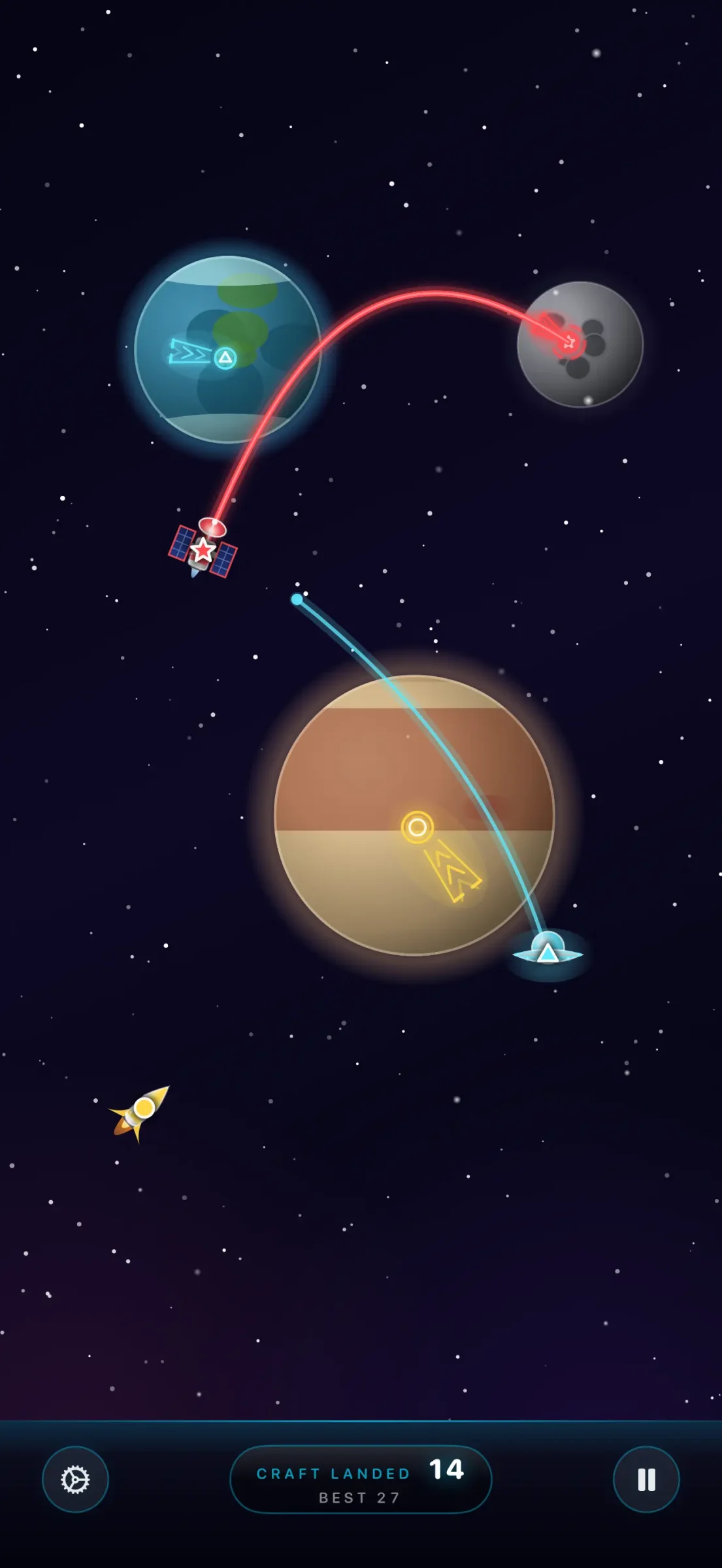
In The Universe, Controlled, you’re not landing planes; you’re running space traffic control. Craft soar in — a satellite, a UFO, a rocket — and you guide them to the planets they want. Touch one, trace a path, and it follows your line exactly. Each craft sports its own color and symbol, and needs to land on the matching world. Your job is to bring them all home while keeping them apart. Crashes, in space and in apps, are bad.
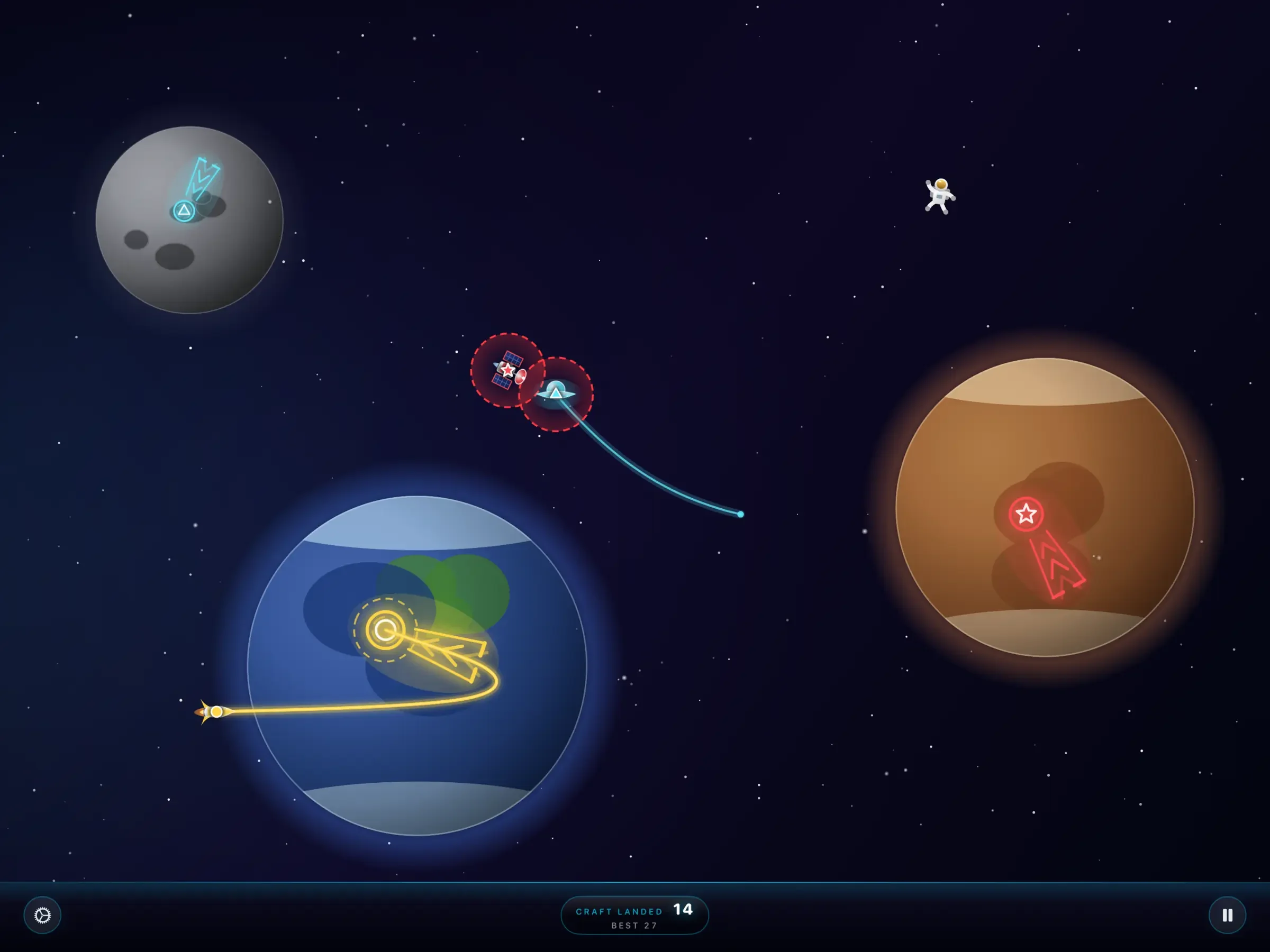
Every so often, something else drifts across the sky: a meteor, an astronaut, an alien, a superhero. These are obstacles. You must avoid them.
(If you’d prefer a more peaceful cosmos, you can turn the flying obstacles off in Settings. The game will call you a monster. It’s fine. It says that to everyone.)
Embracing modern iOS
Flight Control was a game of its moment. In 2009, an iPhone app targeted exactly one screen size, and you held the phone the way the game told you to hold it — in landscape mode.
I wanted The Universe, Controlled to feel just as simple, but at home on the devices we actually use in 2026. So it plays in portrait and landscape. Hold your iPhone upright and play one-handed, or turn it sideways and settle in. It’s lovely on the iPad, too, where there’s a whole lot more universe to control.
A slew of tributes
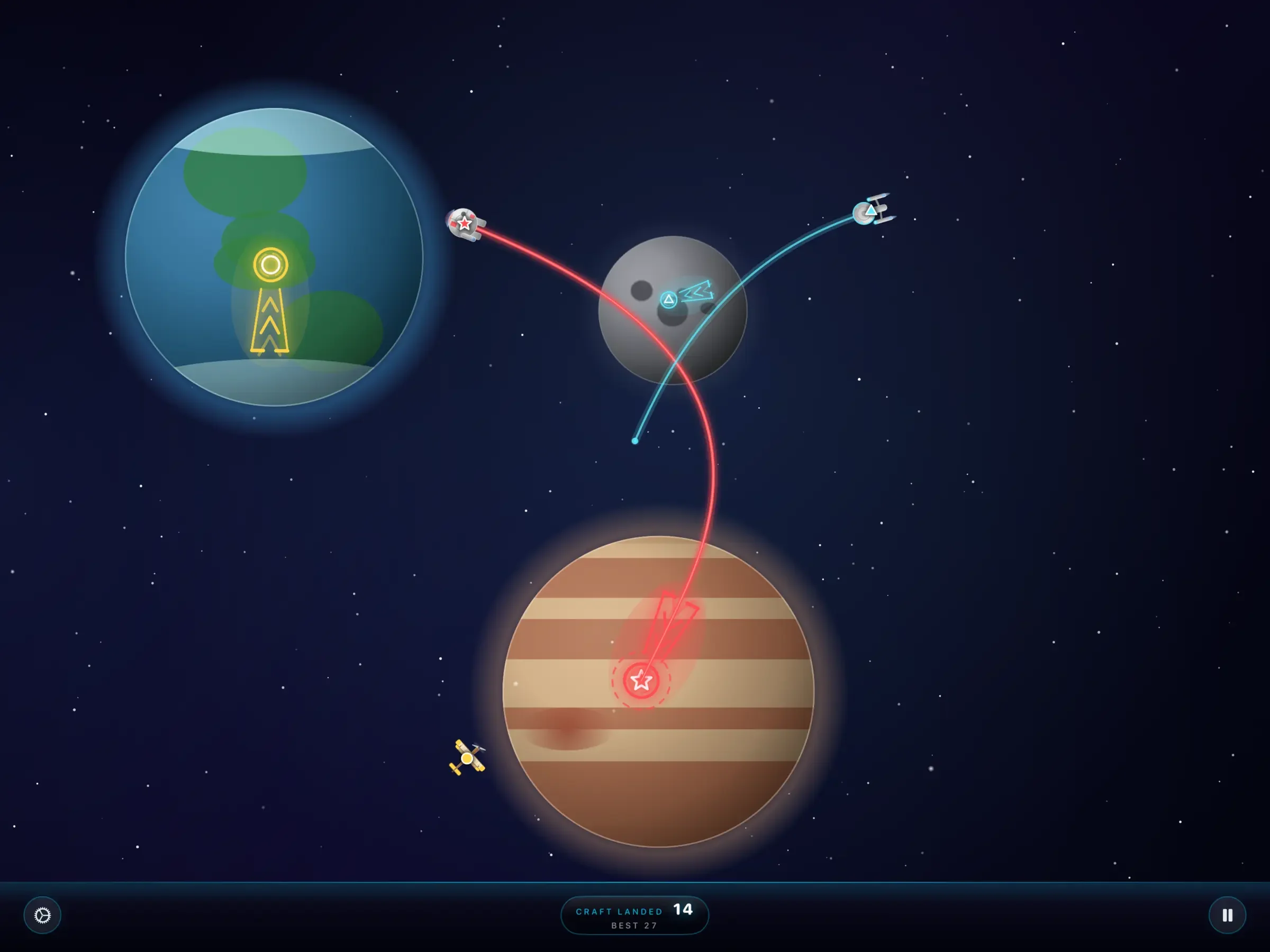
I couldn’t help myself: The Universe, Controlled is packed with a few tributes to sci-fi movies and TV shows I love, or that my nerdy friends love and that I’ve heard of. The unlockable craft may look a bit familiar if you’ve ever watched a starship boldly go somewhere, or seen a certain hunk of junk make a certain run in a certain number of parsecs. The bonus obstacles include a gentle visitor with a glowing fingertip who I suspect would like to phone home, and a furry fellow from Melmac who is waving hello and possibly eyeing your cat.
There is also a pterodactyl. In space. It made me laugh. I’m a simple man.
Free, with extras
Flight Control cost a buck. The Universe, Controlled is free.
I mean actually free. You can play forever without paying me a cent. There are no timers, no energy meters, and no levels held hostage. There are some house ads for my other apps.
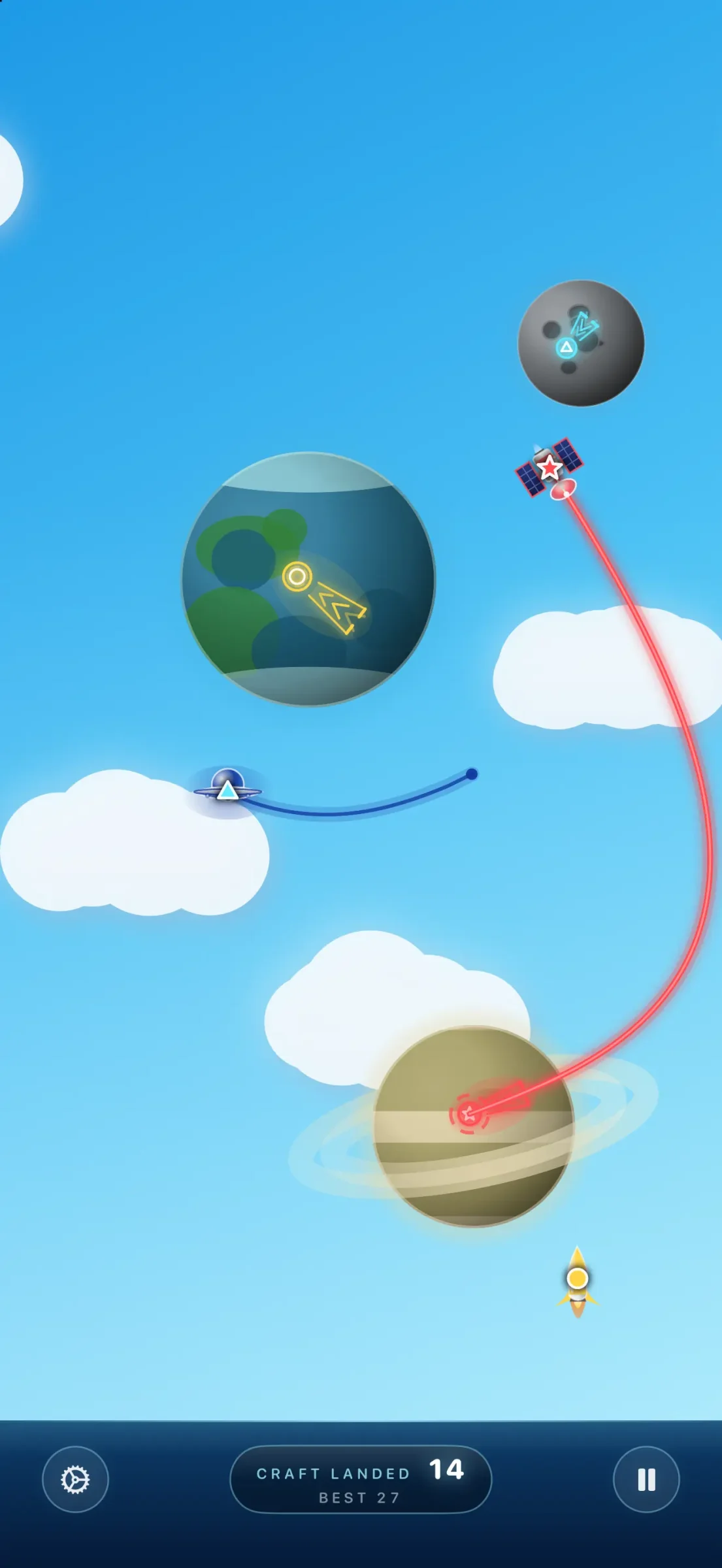
If you’d like to make the ads go away — and get some fun extras while you’re at it — you can Unlock The Universe for a few bucks. That gets you no ads, ever; three skies (Deep Space, Daytime, and Golden); a bunch more spacecraft; and those extra flying obstacles.
And if you’re feeling especially generous, there’s Platinum Universe for $10, which adds a badge on your menu, your choice of four app icons, and — my favorite — your name in the game’s credits as a Platinum supporter.
Both are one-time purchases, not subscriptions. You know how I feel about paying developers, but I’m also not going to ask you to subscribe to a game about landing UFOs.
Now boarding
The Universe, Controlled takes seconds to learn, and mere minutes to play. I’ve somehow spent hours “testing” it anyway. I really, really like this game. I hope you do, too.
It’s free in the App Store for iPhone and iPad. Space is crowded. Somebody should be in charge. I pick you.