My friends and followers know that over the past couple years, I made a concerted effort to get in better shape. They know because I often won’t shut up about it.
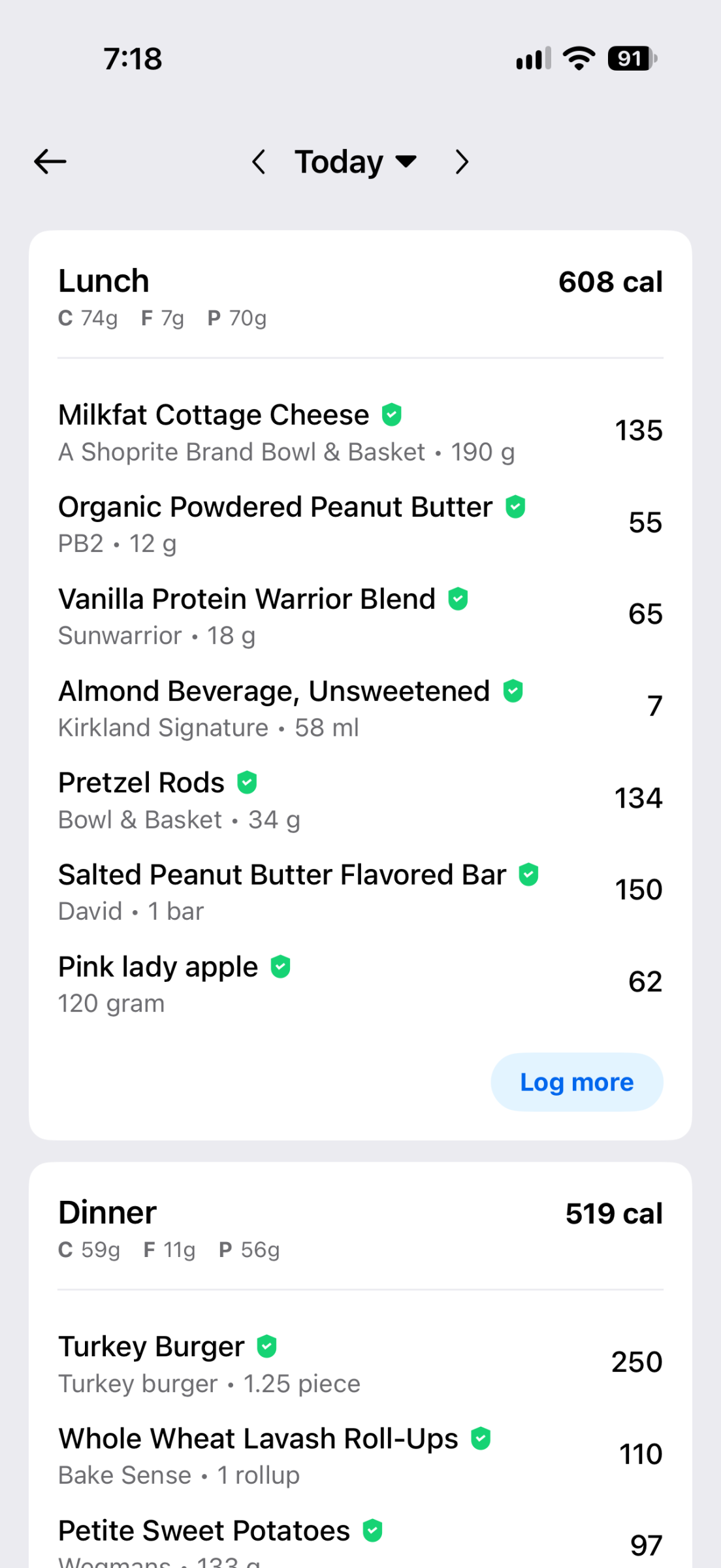
Although my weight loss (shedding 65 pounds!) involved a real-live human trainer (whom I only met in person once), a few iOS apps were instrumental. My approach to dropping weight and getting more fit involved eating less and working out more.
Several apps helped.
Tracking calories sucks and I hate it, and I do it every day. The app I like the least that I use the most is MyFitnessPal. Its interface is at best fine, and recent updates to the UI scream change for change’s sake… But the app has an excellent food database, decent enough meal and recipe handling (for when you eat the same meals often), and it’s smart about surfacing your frequently tracked foods as you search.
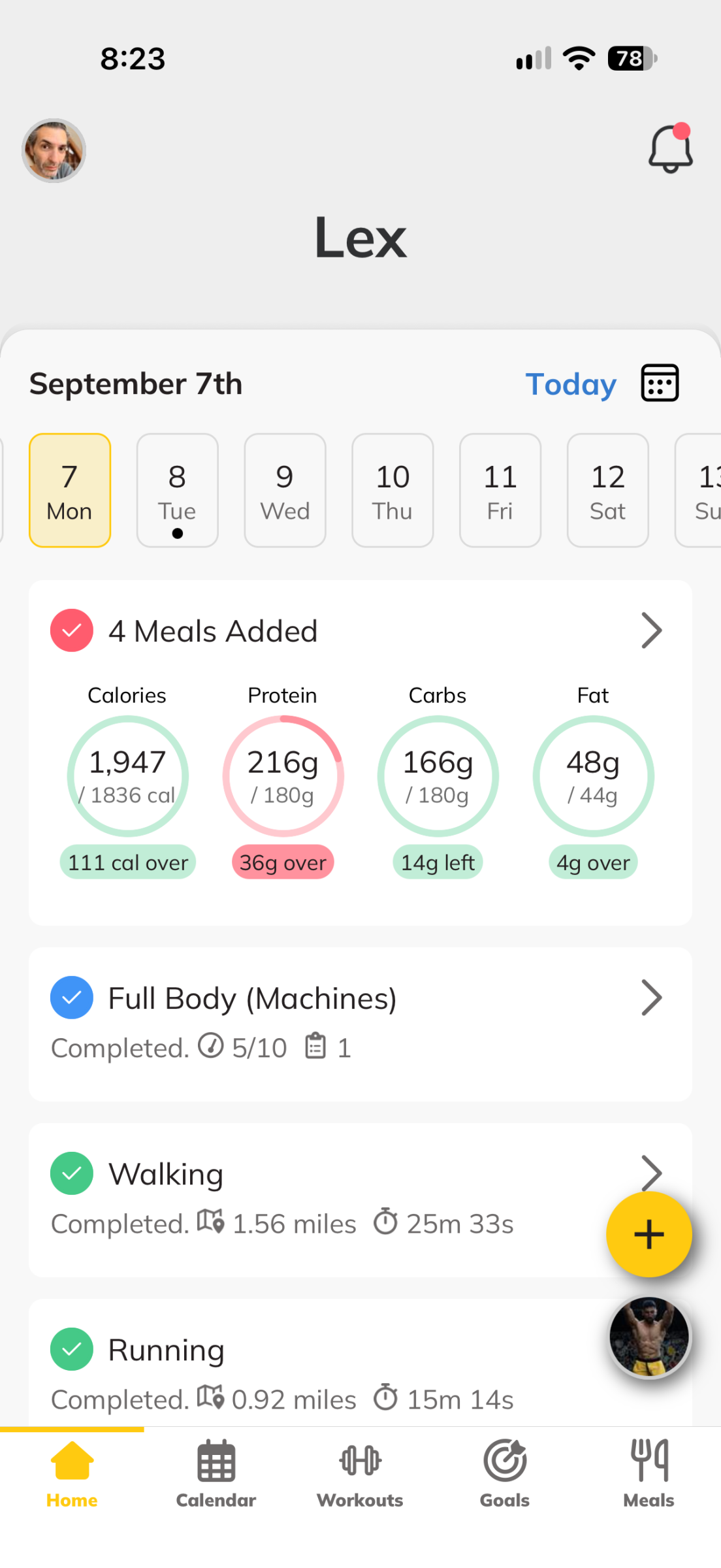
MyFitnessPal’s subscription price is steep, though it gets discounted around Black Friday into the holiday season, and it’s worth it for a handful of features: Removing the egregious ads, using the barcode scanner, and slightly easier macro tracking if you’re focused on protein or carbs or whatever. If you don’t want to pay for the subscription and are just starting out, the free trial is worth it so you can scan barcodes of your frequently eaten foods for easier tracking; they’ll show up first in your regular searches later.
Trainerize is another middling app. My trainer uses it. Many trainers use it. The core reason I use MyFitnessPal vs. some of the other calorie tracker apps is the app’s API. Though the API is private and MyFitnessPal is stingy about sharing access, Trainerize does integrate with it, which means my trainer can easily see what I’m eating and how it all breaks down nutritionally. That’s helpful.
Trainerize is also where my trainer programs in my workouts, including his own and third-party videos providing instructions on specific activities. I track all my strength training workouts in the app, and again, that data is surfaced for the trainer. The app smartly records my previous weight levels and rep counts, which is helpful.
It can be tricky to track calories at restaurants. While some restaurants publish their calorie breakdowns, many don’t. If I know I’m going out to a meal, I like to figure out what’s right for me to order in advance, because I can plan the rest of my day around making sure I hit my calorie and protein goals with that restaurant meal included.
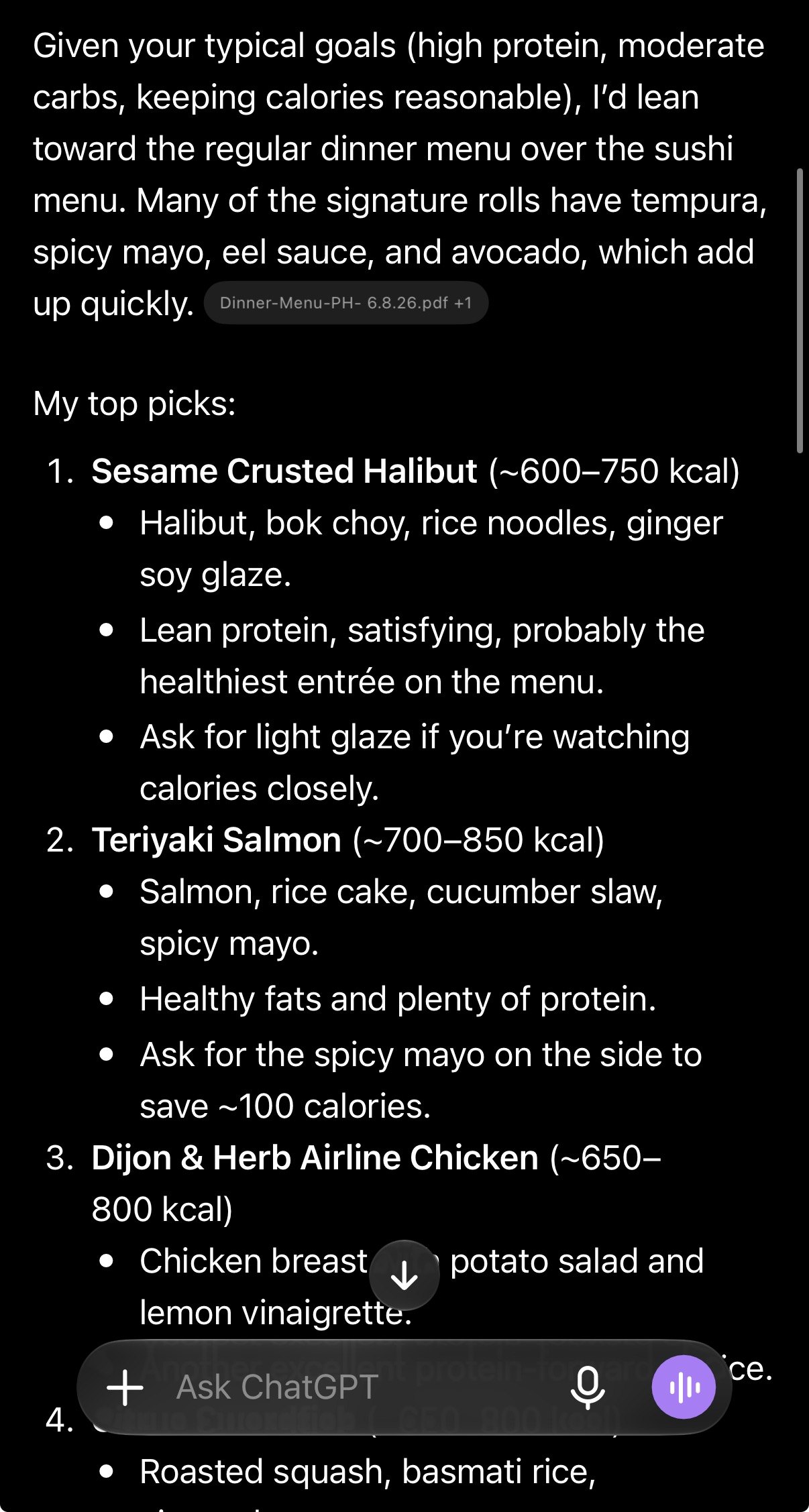
As it turns out, LLMs are uniquely well-suited to scanning menus and suggesting good dishes based on what they know of your food preferences and macro goals. In other words, because ChatGPT knows what foods I dislike (since I’ve told it), and what calories I prefer to allot to different meals, and my minimum protein requirements, it can study a menu and report back on the best options for me… along with nutrition breakdown estimates.
If the menu isn’t online, I’ll snap a photo or two of it while at the restaurant, and let the LLM do its work.
Losing weight with diet and exercise requires patience, time, and self-discipline. The apps help. And they never complain about leg day.