The iPhone Duo reviews landed, and I read a slew of them. Because I care about you. And because I’m curious about Apple’s new folding phone.
The phone ships Thursday — to the lucky few whose pre-orders didn’t slip to later, anyway.
I should say up front: I have never held an iPhone Duo. No review unit, no pre-order. More on that at the end. But the reviews are strikingly consistent about what Apple nailed and what it didn’t, so here’s the consensus I’m seeing from early write-ups.
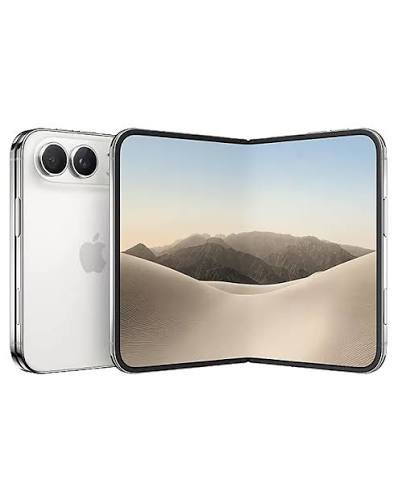
Everyone loves the hardware
Every reviewer praises the phone hardware itself. TechRadar’s Lance Ulanoff lists “Best folding hinge ever?” among his reasons to buy, and describes the Duo as “a digital fidget spinner” he couldn’t stop opening and closing. Gizmodo’s Raymond Wong points out that it opens completely flat, to a full 180 degrees, which most Android foldables still don’t. Tom’s Guide’s Mark Spoonauer calls it “the best designed foldable phone I’ve ever tested.” Polished titanium, IP68 water and dust resistance, a satisfying magnetic clap when it closes, and at 5.2mm open, the thinnest iPhone ever in that position.
The matte screen is the star
Every review I read praised the nano-texture finish on the 7.6-inch inner display. It hides the crease (you can still feel it, and spot it at the right angle, but it mostly disappears), and it kills glare. The Verge’s Allison Johnson liked it enough to write a separate piece about it:
The matte screen is the best thing about the Duo, and I hope every other foldable maker copies it.
Wired’s Julian Chokkattu calls it “the star of the show.” The tradeoff, which Tom’s Guide and Gizmodo both flag: matte means the colors are a little less vibrant and the blacks a little less inky than a glossy OLED. Spoonauer preferred Samsung’s Galaxy Z Fold 8 screen for watching a movie trailer. Wong thinks Apple made the right call anyway. So does Johnson. I’m not one who notices if the blacks are inky or not, so this tradeoff doesn’t fuss me.
It’s heavy
The Duo weighs 254 grams. That’s heavier than an iPhone 18 Pro Max, and 53 grams heavier than the Galaxy Z Fold 8. Every reviewer feels it. Wong says it made his front pocket sag badly enough that he started wearing a belt again. Engadget’s Sam Rutherford says it can feel like an anchor in loose pockets. Chokkattu says it gets tiring after extended doomscrolling, and suspects Apple will go after the weight with the Duo 2, the way Samsung did with its latest fold.
The cover screen is the big question mark
Apple gave both displays the same 1.4:1 aspect ratio, so the phone is the same shape open and closed. Clever. But it means the 5.4-inch outer screen is short and squat, and Apple parks the dock and app controls in a strip down the right side, which makes it narrower still.
The Verge’s Nilay Patel and Allison Johnson are the harshest about this:
Apple says you’re getting 90 percent of the screen area of an iPhone 18 Pro, but that’s pretty small for today’s apps. It’s like having an iPhone 5 in a world of iPhone Pro Maxes.
Texting with the keyboard up, they could see two or three messages at a time. Everything about the phone, they say, nudges you to flip it open. Tom’s Guide notes the dock can’t be moved to the left, so lefties are out of luck. Reaching the far side of the cover screen one-handed, on a phone this heavy, is a stretch for everyone. Ulanoff predicts the right-side layout “will divide opinion.” Apple has said a Reachability feature is coming in a software update.
The apps aren’t ready
This is the one I whined about back in September, and the reviews bear it out. The Verge describes three tiers of apps: plain iPhone apps that run with black bars and look silly; a “messy middle” of apps updated for iOS 27 but not for the Duo, with a telltale black bar on the right of the cover screen; and true Duo apps built against iOS 27.1, which look great. Slack, Netflix, Instagram’s Edits app, Carrot Weather, and Spotify all get shout-outs in that last group.
Chokkattu sums up the gap: “When an app is properly optimized, the experience is chef’s kiss.” His advice is to wait a few months for developers to catch up. Spoonauer expects they will, “out of fear of sheer embarrassment.” As one of those developers: Yeah. We will; be patient.
Multitasking gets a mixed grade. The Duo runs iOS, not iPadOS, and Apple built a new split-screen system for it. Two apps, side by side, landscape only, always a 50/50 split. Rotate to portrait and the split goes away, unless one of the apps is a video player. Wired and The Verge both find it rigid; Tom’s Guide likes it fine.
The camera and Face ID compromises
Two 48-megapixel rear cameras and no telephoto: Every review flags the camera setup, and most call it the biggest hardware disappointment on a $1,999 phone. The Verge says the main sensor is smaller than the 18 Pro’s, more in line with the iPhone Air. Spoonauer’s 10x zoom comparison against an 18 Pro Max came out looking, on the Duo, “like a blurry watercolor.” The 4-megapixel under-display camera on the inner screen is fine for FaceTime and nothing else.
And there’s no Face ID. Touch ID lives in the side button. Nearly every reviewer confesses to staring at the cover screen waiting for it to unlock. Spoonauer calls it a downgrade. I once went from an iPad Pro (with Face ID) to an iPad Air (without), and I still stare at it to unlock sometimes. It never goes away.
Battery and heat
Mixed reports. Wired and Engadget both ended most days with around 40 percent left, and Engadget’s video rundown test ran nearly 29 hours. The Verge had a rougher time: Nilay needed a midday charge on a normal workday, and Nilay’s is the only review that really complains about heat. Third-party video apps, Google’s apps, and the two-screen camera tricks made it hot enough to lag.
The verdicts
The scores line up neatly. Engadget gives it 8.8 out of 10 and says “there’s no doubt Ternus and company have made a first-class foldable.” Gizmodo gives it 4 out of 5: worth the wait, but very expensive. Tom’s Guide calls it the best foldable yet. TechRadar says for Apple fans who’ve been waiting, “there is no other or better choice.” The Verge and Wired both land on 7 out of 10. The Verge’s headline calls it “a messy, expensive, good time” and “an early adopter special.” Wired suggests that it may be prudent to wait for the Duo 2.
Wong’s closing line stuck with me: “The iPhone Duo isn’t the ‘definitive’ iPhone to own… Only you can be honest with yourself about your needs.”
So, honestly
I’ve never held an iPhone Duo. I decided a while ago that I’d sit this round out with my iPhone 18 Pro, and nothing in these reviews changed my mind.
The iPhone Duo, as promoted so far, solves a problem I don’t have. I like using my iPhone one-handed. I like it slim in my pocket. And when I want more screen to work with, I have an iPad Air. The part of the Duo that reviewers struggled with most — a cramped cover screen on a heavy phone that keeps nudging you to unfold it — is precisely the part of an iPhone I like best about my iPhone.
But I’m intrigued and impressed by what I’m hearing about the hardware. I’d love to play with one — just not pay for one.
I’m just curious whether I’ll ever need one for myself. Maybe the Duo 2 will be lighter, the apps will be ready, and the problem it solves will turn out to be one I have after all. For now, my 18 Pro stays in my pocket, and my iPad stays on the desk.