Riley Testut built his own app store because Apple wouldn’t let him play Pokémon on his iPhone.
That’s an oversimplification, but barely. But the early App Store rejection Riley dealt with became his origin story, and it doesn’t get more indie than this: A man wants one app to exist, a gatekeeper says no, and the guy decides he’ll skip the gate entirely.
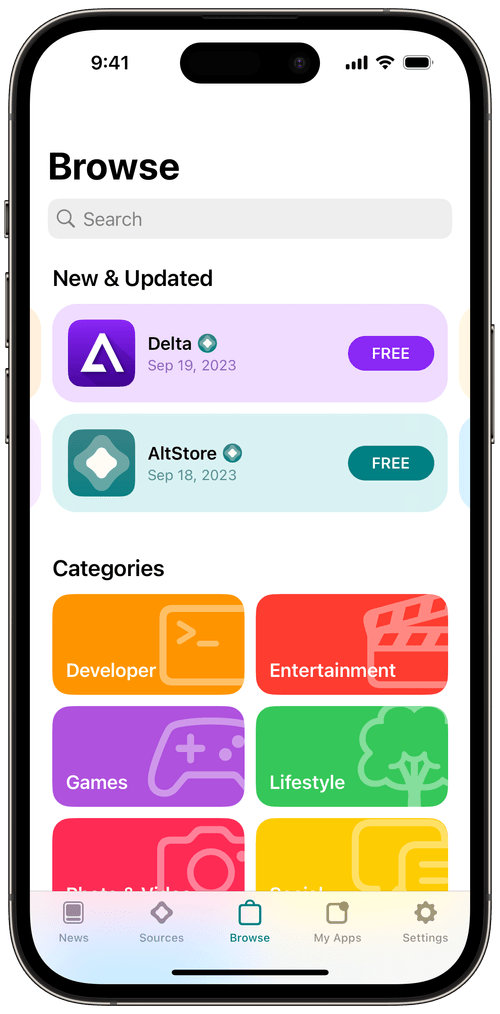
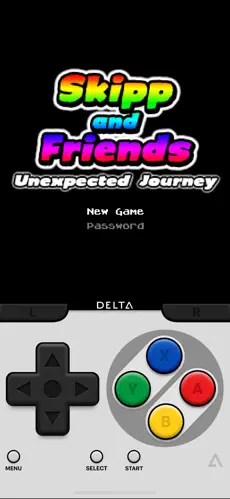
You probably know Riley’s work. He makes Delta, the gorgeous Nintendo emulator that finally landed in the App Store in April 2024, after more than a decade of Apple blanket rejecting emulators.
Riley is also the force behind AltStore, the alternative app marketplace that launched in the European Union that same month, the moment the EU’s Digital Markets Act forced Apple to allow such stores. If you want the whole saga, Riley told it at Deep Dish Swift, and his talk is worth watching in its entirety. Riley goes deep on his early back-and-forths with Apple, his pain in launching AltStore, and the chapter where he unexpectedly spent an extra month living in Europe to get AltStore launched, which struck me as living large. Riley assured me it was, in fact, mostly stressful.
Riley reached out to me, and we talked. He wanted to share some perspectives on distributing apps outside the App Store. He did not need much prompting.
From a third bedroom to Union Square
AltStore was, for years, Riley and his co-founder Shane Gill, working out of the spare bedroom of Riley’s home in Texas. It’s now a real company: eight people, most of them in New York, in an actual office near Union Square. A year ago, the company took outside funding for the first time, with a goal that Riley states plainly: They want to be a real app store, in every country, not just in the EU, and they want developers to feel confident that AltStore will stick around.
But the business is still, at its core, a Patreon. Riley and Shane’s Patreon has been the entire income source since the beginning, and he really seems to appreciate that. (Patreon supporters are kicking in $20k+ per month. I understand Riley’s appreciation.) Users love the Patreon, he told me, because they’re supporting developers, not just buying a software product. And he can issue refunds himself, which is a thing Apple has never let a developer do.
“I just wanted to play Pokémon on my phone”
I asked Riley why — as an American who can’t even access international third-party app stores — he was the guy to build AltStore. Why did building an alternative to the App Store become one of his projects?
“I literally feel like I didn’t choose it,” he told me. “I just wanted to play Pokémon on my phone.” Pokémon Emerald, specifically. It’s perfect for a phone. The controls aren’t hard. So he built an emulator, first as an open-source project he released in high school for people to compile themselves. Then he attempted to release it as Delta, which he submitted to the App Store, and which Apple in turn rejected, as Apple did with all emulators at the time.
Riley told me that while dealing with that App Store rejection, he concluded that if he felt this strongly about this one app of his own, other developers surely felt the same way about theirs. And they couldn’t ship some of them, either. “That was the eye-opening moment for me,” he said. “I should build something not just for me, but for others.” When the EU passed the DMA, he said, “it was like, we have to do it. This is the moment.”
The antagonism years
When AltStore launched in Europe, Riley says Apple was openly hostile. Apple was rejecting apps from his store. Reviews took forever. Apple repeatedly kicked up roadblocks, creating friction that didn’t need to exist. “We could just sense from the outside: Apple does not like us,” he said. “We get no special treatment. We are only here because we’re allowed to be.”
That stung, because Riley — who strikes me as a true optimist — hoped to be aligned with Apple. “We’re not trying to take apps from the App Store,” he said. “We’re trying to allow new apps. We think that’s good for everyone.” Apple wasn’t interested in working with him on those terms, so AltStore got more aggressively defensive for a while. (Watch that video I mentioned before, and learn about Riley’s “Notarization Sucks” app. It’s great.)
Riley even has a theory about why Apple suddenly decided to allow emulators in 2024: Apple figured Delta was the whole point of AltStore, and if Delta could be in the App Store, the AltStore project would wither. “I actually think it was a very strong strategic move by Apple,” he said. “Good for them.” It just didn’t work, because by then AltStore was never only about Delta. His thought at the time, when he got the surprising Delta approval: “I don’t want to stop now because my problems are solved.”
The thaw
Earlier this year, something changed in the dynamic between Apple and AltStore.
Within the span of a single week, Riley told me, Apple did several nice things for him: They invited him to WWDC. He’d applied every year for more than a decade and never gotten in. They waived the letter of credit AltStore had been required to maintain to operate as a marketplace. And they quietly fixed a backend problem for Delta that had been nagging him.
“This is interesting. This is new,” he remembers thinking. “They’re actually treating us like partners.”
A couple of weeks later, Apple announced that Tim Cook was stepping aside and John Ternus would become CEO.
Riley is careful here. Nobody at Apple told him, “New boss, new Apple mindset.” He just noticed a tangible shift in Apple’s approach before the company made the big Cook/Ternus announcement, and the timing was, in his words, suspicious.
Riley also believes Tim Cook genuinely thought Apple had to be a hard-ass about all… this. Nobody outside Cupertino can say for sure. Apple also came to terms with the European Commission around the same time, and Riley believes that Apple no longer wants to draw the Commission’s ire by flagrantly hampering the marketplaces the law requires.
Whatever the cause, the effect is real. At WWDC this year, Delta’s icon was up on the wall alongside other app icons, which is a significant milestone for any indie developer — particularly one that Apple spent years rejecting. Riley says that he now finally feels like he can reach out to Apple and ask for help. He’s no longer afraid that any given Delta update will be rejected. “They are acting more like actual business partners.”
He also thinks the arguments have shifted. Apple used to say alternative marketplaces were dangerous: security, stability, battery life, the works. AltStore now has millions of users, and Riley says there hasn’t been a single incident. “Apple has changed their arguments from ‘they’re big and dangerous’ to ‘nobody uses them,’” he said. “Because their security argument was just completely unfounded.” But Riley’s “millions of users” are a pretty solid counter to Apple’s latest claim.
What’s actually in AltStore
I’m in New Jersey. I can’t use AltStore. So I asked Riley what Europeans are actually installing.
Delta, for one. Then the old, pre-DMA version of AltStore, which can install apps that haven’t gone through Apple’s notarization. And then the list gets even more fun.
One of the most popular apps in AltStore right now is a utility for jailbreaking your e-scooter. Riley never would have guessed it, but there are enthusiasts who love it. There’s a Japanese developer whose app lets you remap the Side button so it launches an assistant other than Siri, which Apple allows only in Japan and would prefer nobody talk about. The app is literally available in Apple’s App Store too, but Apple won’t promote it. You know who will? AltStore did, and it took off.
There’s Clip, Riley’s own clipboard manager, which has had to rely on a workaround to capture your clipboard, and which, he told me, iOS 27 finally lets work fully automatically, the way a clipboard manager should. He’s stoked. He uses it all the time. I’m legitimately jealous.
And there’s UTM, a virtual machine app that runs Windows on your iPad, which was on AltStore for years. When Riley tried to make it one of AltStore PAL’s first third-party apps, Apple rejected it. Then Apple called him with “great news”: UTM would be allowed not just in AltStore but in the App Store, too. So now the App Store supports virtual machines. You’re welcome, everyone.
In Europe, Delta itself is about to do something you can’t do in the App Store version: use the volume buttons as L and R shoulder buttons when you hold your phone sideways. App Store rules forbid using the volume buttons for anything but cameras (and, of course, volume). In AltStore, Riley’s philosophy is, “why not?”
Why a US developer should care
I’ll admit, I didn’t realize you could sell your apps in alternative app stores and the App Store. I thought Apple’s rule was you could only be in one or the other. I was wrong.
Riley’s pitch to developers whose apps are already in the App Store is simple. It’s the same binary. There’s an API to detect at runtime where the app was installed from, if you care. You submit through App Store Connect, tick an extra box, and one build gets approved for the App Store and for alternative marketplaces at the same time. (Yes, Apple does human review of AltStore apps. Screenshots, the whole thing. It is not the Mac’s automated notarization. I had no idea. I used profanity when Riley told me this was how it works.) If you’re already putting up with App Review, Riley’s point is that AltStore costs you essentially nothing extra.
What you get is a self-selected audience of enthusiasts who like trying new apps. “It’s much easier to make a name for yourself,” he said, than in an App Store where you’re one of a couple million apps. And, he added, it’s just more fun. Fewer roadblocks. Less stress. I’d add: More Riley.
The in-app purchase Apple is making him sell
Delta is about to ship a big update for the iPhone Duo, and that update will include in-app purchases worldwide, which Riley does not necessarily want, and which Apple is requiring. The story of how that happened is a good illustration of something I’ve complained about before: Apple’s rules are… a lot.
After the Epic ruling, Delta added a link to its Patreon in the US App Store version. Apple’s rules said that if you link out, you also have to offer in-app purchase, so Riley added US-only in-app purchases priced at triple the Patreon tier, essentially labeled please don’t buy this. He told Apple exactly what he was doing. Apple approved it. A year of updates went by.
Then one day Apple said: Wait, you only have in-app purchase in the US! If you want external purchases anywhere, you must offer in-app purchase everywhere! Riley doesn’t believe that rule had ever been stated before. It didn’t matter. No Delta updates until he complied.
So the Duo update will have IAP worldwide, at $5 to Patreon’s $3. “We’re just owning it,” he said. “We’ll only fight so hard.”
When I floated my theory that Apple is sometimes intentionally vague about what’s allowed, Riley mostly agreed. “It allows them leeway,” he said. If Apple doesn’t care, it doesn’t care. If one app gets very popular doing something Apple dislikes, there’s always a rule to point to. “I know they look at Delta very carefully” with every release he submits, Riley told me.
Will AltStore ever come to the US?
The big question I put to Riley was whether he thinks AltStore will ever launch in the US? “I do firmly believe it’ll happen,” Riley said. “It is just a question of time. And I don’t think Apple is going to do it voluntarily.”
His read: Something forces Apple’s corporate hand. The Department of Justice case, a settlement, another lawsuit, something else. Meanwhile, AltStore’s reach keeps growing: Australia opens up to alternative marketplaces later this year, Riley said. The UK is next year. At some point, in his view, keeping the world segmented stops making sense even to Apple. “They get pushed and pushed, they finally are forced to allow it in the US, and then it’s worldwide. That’s how I envision this happening.”
I hope he’s right. I want a clipboard manager on my phone. I don’t need to hack an e-scooter, but still.
The part I admire most
As you’ll see in that video I’m certain you’re heeding my advice to watch, while attempting to get a second app approved for AltStore pre-launch (after Delta), that clipboard manager kept getting rejected by Apple. So he made an app called Notarization Sucks, whose sole purpose was to share the story of how Apple kept rejecting Clip. And so Riley told Apple, essentially, approve Notarization Sucks or approve the other one. Notarization Sucks is very funny, and he is a person whose business Apple could materially hamper at any moment. He made it anyway. Riley isn’t afraid to call Apple out, in public, with his name attached. A lot of folks wouldn’t have the confidence to do that. I admire it.
It also helps that he’s been proven right, repeatedly. UTM got in. Emulators got in. Delta is on the wall at WWDC.
One last thing. Fifteen or so years ago, I had a humor book called The Snuggie Sutra. It was the Kama Sutra, but everyone was wearing Snuggies, so you couldn’t see anything. It did well. A friend and I made an app version, and Apple rejected it, and I appealed all the way up to Tim Cook, who forwarded it along to Phil Schiller, and the answer stayed no. I asked Riley whether that app would be welcome in AltStore. His exact words: “You should do it. We would promote it.”
I’m going to go see if the Xcode project still opens.
Check out Delta and AltStore, and if you’d like to support what Riley and Shane are building, their Patreon is where the money has always gone.