The day Apple swore we’d never forget (and I haven’t)
The long and winding road to iTunes: A brief history of musical holdouts
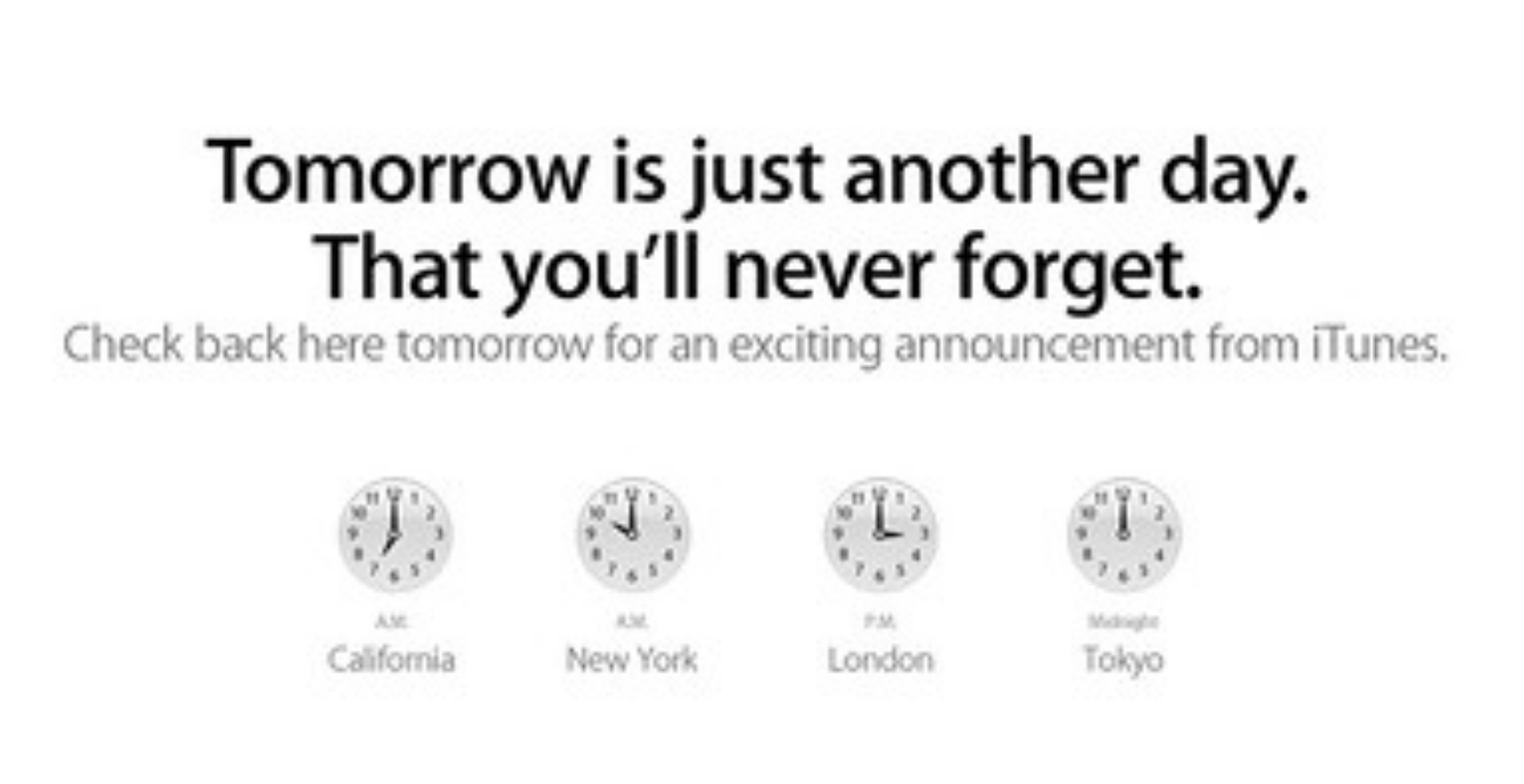
On November 15, 2010, Apple hyped up the next day in a big way. “Tomorrow is just another day. That you’ll never forget,” read their announcement. That announcement, of course, was that The Beatles were arriving on iTunes. It wasn’t a tweet — it was the sole message emblazoned across Apple.com for a day.
Sixteen years later, it’s funny to look back and remember artists once held their music back from iTunes. (It’s also funny that Apple was this excited about The Beatles, although I will acknowledge — controversial Lex on Tech opinion incoming — that The Beatles are a very good band.)
I celebrate this November 16 anniversary every year, mostly because I’m still amused that Apple said we’d never forget the day, so I choose to make their prophecy a self-fulfilling one.
But I’m also reminded of a few other times major artists had tiffs with music streaming services.
In 2014, Taylor Swift pulled her library from Spotify, shortly before the release of her album 1989, when the streaming service wouldn’t keep her music off its free tier (for which, at the time, the company didn’t pay artists).
In 2015, Taylor threatened to withhold that 1989 album release from Apple Music because of Apple’s free tier; she published an open letter to Tim Cook, encouraging the company to pay artists for streams that happened during a user’s three-month Apple Music trial. Apple agreed.
In 2022, Neil Young pulled his music from Spotify because of that platform’s support for anti-vaxxer and crazy person Joe Rogan. Crosby, Stills, and Nash, along with Joni Mitchell, followed suit. A couple years later, the artists relented, since Spotify’s support for Rogan proved unwavering.
Other big holdouts: AC/DC refused iTunes for years because they hated that Apple let consumers buy individual tracks vs. entire albums. They joined in 2012.
Led Zeppelin and Pink Floyd relented and let their music appear on Spotify starting in 2013.
Prince yanked his music from Spotify and a few other platforms in 2015, streaming only on Tidal. His library returned to all the other platforms in 2017, after his death.
Tool didn’t join iTunes or streaming services until 2019, just a few weeks before they released their first album in fourteen years.
Garth Brooks — remember Garth Brooks? — never allowed his music to be sold on iTunes. In 2016, he went exclusive with Amazon Music, and his albums still aren’t on Spotify or Apple Music today.